
Notes from Nicolai Tangen’s keynote “Our AI Journey” at AI Forum Europe 2026, Station F, Paris, 22 June 2026
By Jukka Märijärvi, Partner, Quatromine · Enterprise AI diffusion series, part one
Most large companies in Europe now use AI somewhere. Far fewer have made it part of how the whole company works. Getting from one to the other, out of pilots and into the core of the business, is what we call enterprise AI diffusion. I think it is one of the hardest management problems of this decade, and it matters more for Europe than for most.
In June I was in the room at Station F in Paris when Nicolai Tangen, CEO of Norges Bank Investment Management (NBIM), gave his keynote at AI Forum Europe 2026. He was blunt about where Europe stands. It is behind in chips, models and cloud infrastructure. What is left is the application layer, meaning the products and services built around AI. That is still a substantial opportunity, but only if Europe moves now. And the value only shows up when AI is used across whole companies, not in isolated pilots.
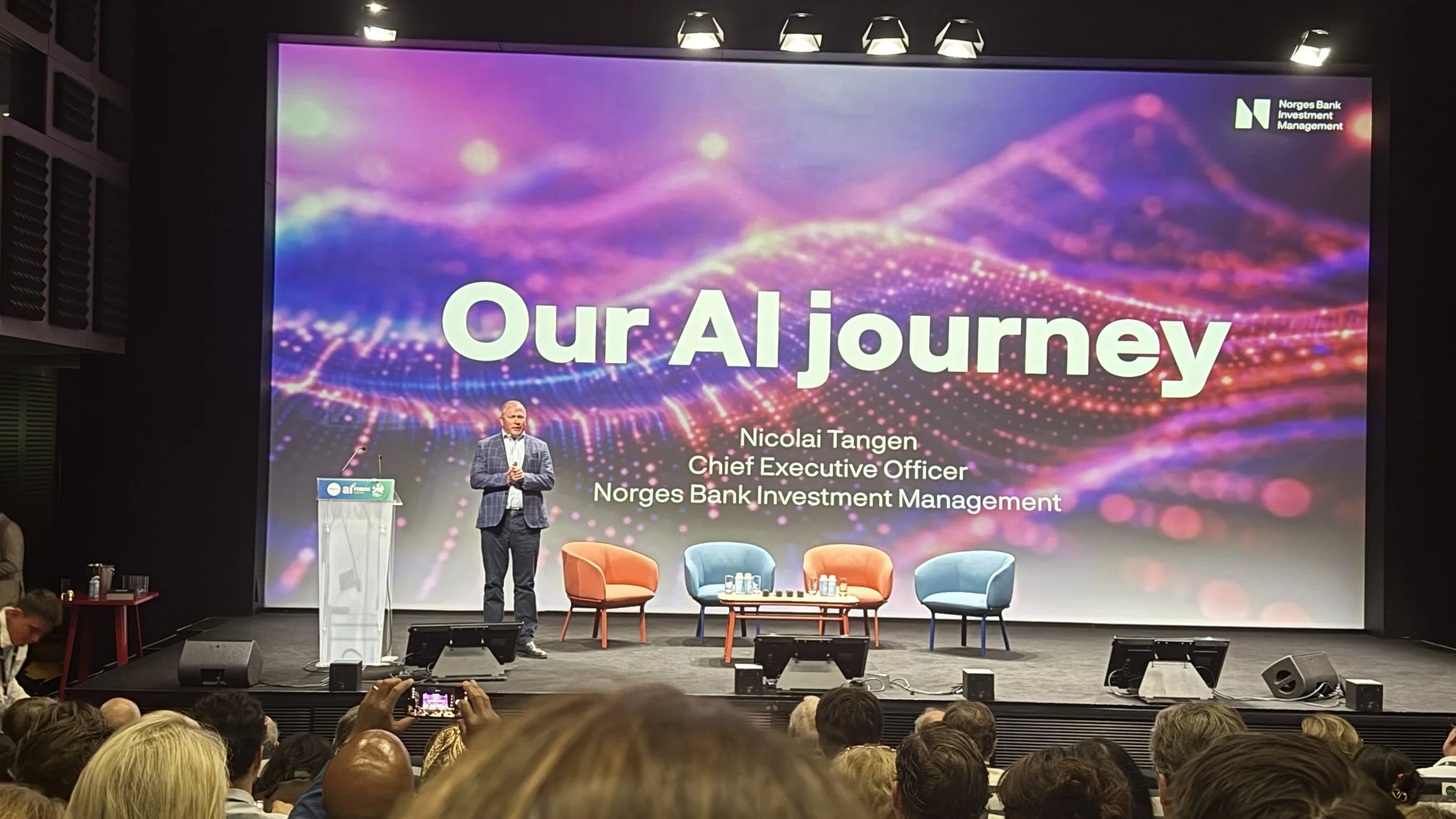
Photo: Jukka Märijärvi
NBIM, which manages Norway’s sovereign wealth fund, has taken on exactly this problem. What follows are my notes from the keynote, with my own assessment.
A case to put in front of a board
Boards ask me whether anyone has actually made AI transformation work. This is the case I would put on the table. NBIM went into it with the attitude that it can only succeed. What makes it rare, in our experience with large corporations, is how personally the CEO has put himself on the line.
No one fired, 20% more efficient
The working principle at NBIM is that AI is used in everything. Tangen started the change with one promise:
“We will not fire anyone, but our target is to be 20% more efficient.”
Using AI is mandatory for all staff. Tangen called it “forced” himself, and admitted that not everyone inside likes the word. The no-redundancy promise is what makes the compulsion work. People do not have to fear that efficiency gains will be paid for with their jobs, so the 20% target reads as a shared goal rather than a threat.
How the change is run
Tangen mentions AI every time he has the microphone. He also follows the work himself, and his questions are short: “where is the code?” and “show me the results”. He does not delegate this.
The change runs on a fixed yearly calendar, which NBIM calls the “Tech Year”. It includes tech days across locations, local hackathons, milestones for AI ambassadors, upskilling pathways and a leader summit. People have to show what they have built at regular intervals. Over time this becomes the normal rhythm of the organisation.
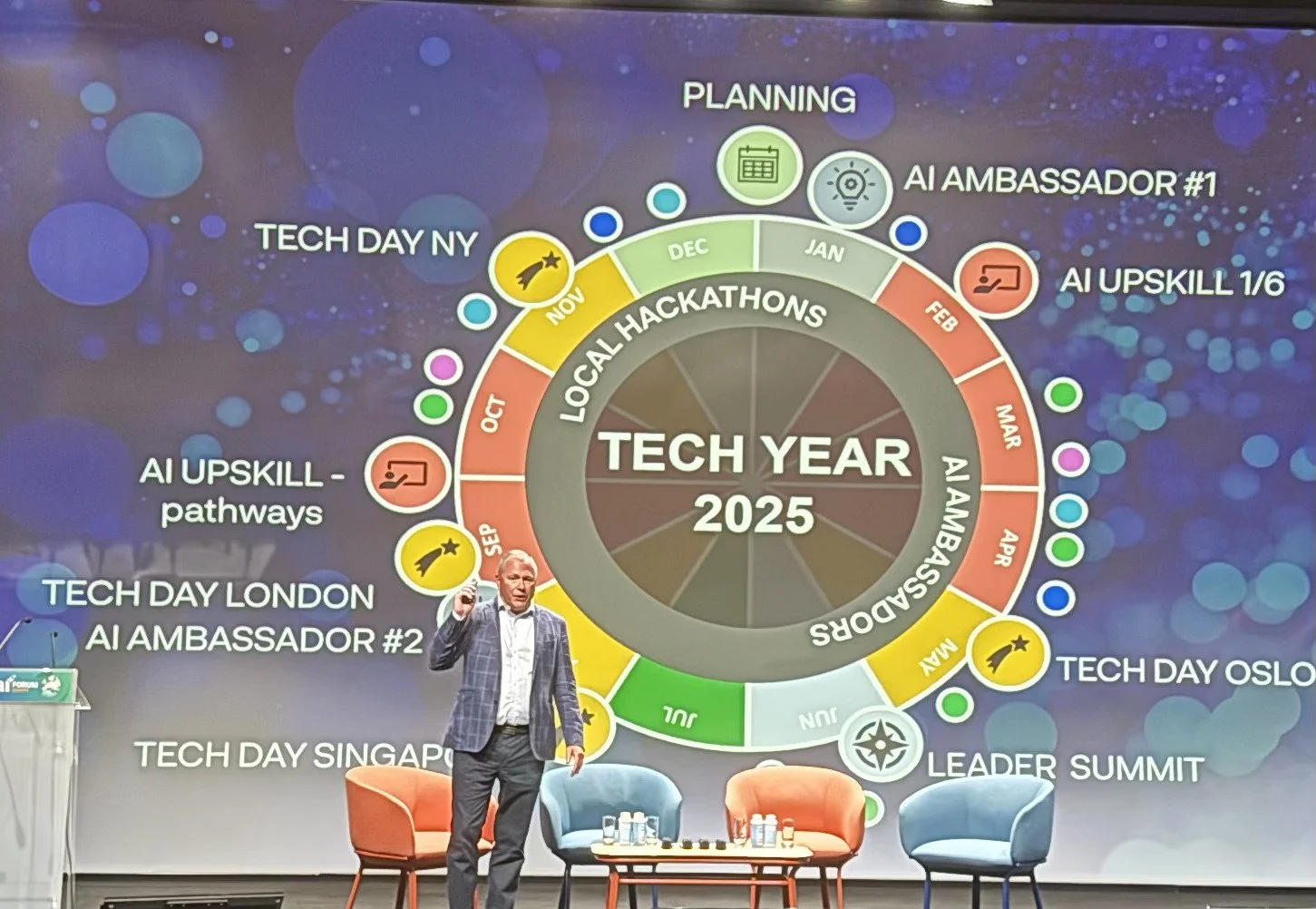
Photo: Jukka Märijärvi
Training is treated as infrastructure. Tangen said that, at the time of the keynote, every member of staff was working in Claude, and Anthropic had trained them on it again and again. Training is mandatory and it does not stop. About 70 of NBIM’s roughly 700 employees act as training ambassadors. They run events where people show their results and bring colleagues along.
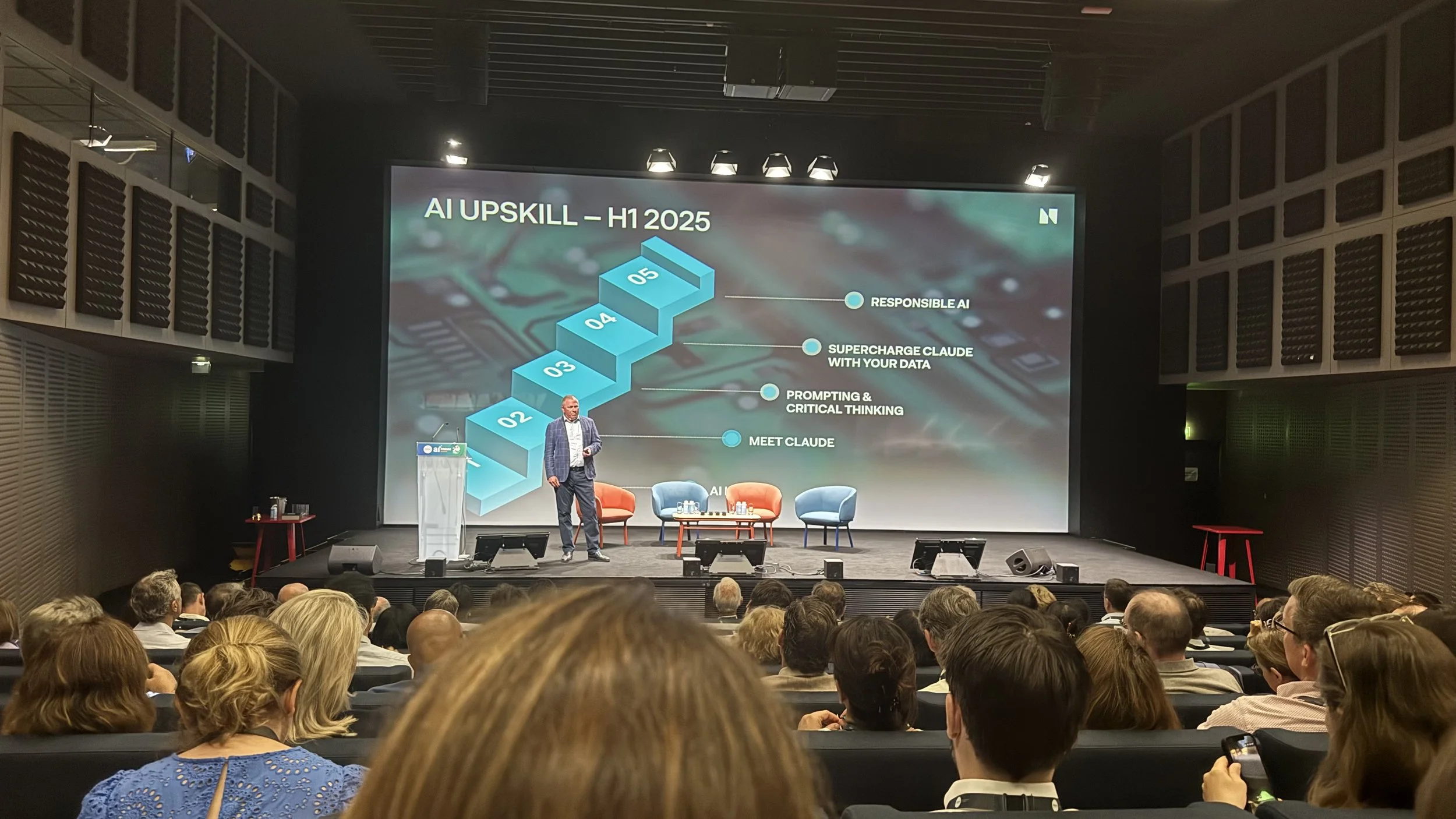
Photo: Jukka Märijärvi
A central AI team owns the framework, the tools and special topics, and it reports to the CEO. That reporting line matters. AI targets and business priorities clash often, and someone at the top has to judge whether the business is right to say no. Tangen noted that it often is.
People get the best tools. Without them, Tangen said, they will not experiment and will not put anything into practice. They should have fun, too. Token costs (what an organisation pays for its use of AI models) are already high and rising, but he argued against capping them while the tools are new. In his view this is the phase for use and experimentation, not rationing.
Hiring and onboarding have been rebuilt around AI as well. NBIM now hires only AI-competent, genuinely technical people, and the CEO interviews every new hire. A new joiner used to take up colleagues’ time for as long as two years. AI-assisted onboarding now gets them up to speed in a fraction of that.
Who resists
Tangen’s most memorable line was about resistance: “people hating AI need it the most.” The slow adopters are not who you would expect. He said the oldest and youngest employees at NBIM adopt best. The slowest group is the 32 to 38-year-olds, with small children at home, frequent illness, little sleep and no spare capacity to learn at that stage of life. A change plan that ignores this will misread its own resistance.
What it takes
NBIM shows that AI can be taken across a whole organisation, beyond a pilot or a single department. It also shows what that requires: a CEO who owns the change personally, and core workflows redesigned around AI instead of left as they were. Few companies can copy NBIM’s set-up as it is, so most will need other routes to the same result.
At Quatromine, this is the problem we are working to solve: getting AI out of pilots and into how whole companies work. We will share more about it in this series, so read on.
In part two, I look at why most enterprise AI still does not reach the profit and loss account.
